12
Angry Men
Two points, as
one juror says, are scored more or less backhandedly. The
screenplay explicitly demonstrates the great gulf fixed between reasonable
doubt and plausible suspicion, with all the attendant difficulties between. The filming shows, among other things, that if Columbo’s
birthplace is Clouzot’s Quai des Orfèvres,
then certainly Matlock has his roots here (and in one episode returns to
them as a juror himself).
Dramatically the
case is resolved by, among other things, Shakespearean stagecraft ablating the
avenger to reconcile fathers and sons.
Prof. Sarris’s
charge of humorlessness is dispelled at once by Reginald Rose’s script
and Lumet’s witty direction.
That Kind of Woman
Wiser than thou,
with Old World sophistication, a nabob’s mistress.
The Miami-to-New
York train, a brief stay there (Grand Central, Central Park, “a well-known
restaurant”), the train to Vermont.
A GI paratrooper
on leave takes her measure.
The time is just
before and during the Normandy invasion.
Lumet’s technique
is of the finest, with acting to suit the screenplay’s revelations of
character.
They could not be
followed by Bosley Crowther in a kind of mental cramp at the New York Times.
Halliwell
compares it to Potter’s or Wallace’s Shopworn Angel, John Sturges’ Never
So Few has a similar theme, for example, and so in a way does Resnais’ L’Année
dernière à Marienbad.
The Fugitive Kind
It is, alas, the
fate of Orpheus to lose his Eurydice and, having disdained the Bacchantes, to
shed his skin for them.
And so you have,
with the King of Hell, Williams’ panoply.
Critics have
always had a low opinion of this film, with the notable exception of Bosley
Crowther (New York Times), “this piercing account of loneliness and disappointment
in a crass and tyrannical world.”
The opposite view
is to be found in Halliwell’s Film Guide, “doom-laden melodrama.”
a view from the bridge
The rare
impression of a vertical structure imposed on the conscientious lateral
elements of Brooklyn and the docks goes right to the fop and the longshoreman,
with consequences for Schlesinger (Sunday Bloody Sunday) and Hutton (X
Y and Zee), Miller is for the thing as it stands, a simple confrontation
dressed with opulent richness by Lumet on location.
Long Day’s Journey into Night
The Iceman
Cometh (dir. John Frankenheimer)
imagines an end of the occasion, let us say, and this play disperses the
art so that only Shakespeare remains. That gives you
the absurd situation and its comic overtones.
Crowther put
forth that Richardson and Robards were good, Hepburn and Stockwell not, etc.
The Pawnbroker
The film is
closely related to a view from the bridge in its technique, in its
influence, and in its getting down to essential cases on the bedrock of a perduring
joke. This one was formulated by Shaw, the celebrated
comparison of Jews and Gentiles in the matter of a bargain. Here
is the heartless pawnbroker with no eye for anything but hard cash, not the
Wandering Jew as Crowther thought but the Jew per se, and he explains
himself throughout the film. The world is so much
dross, his domain is square dealing, the world corrupts even that, the
sacrifice of Jesus as represented is another sorrow and a complicated sort of
affront, all this is perhaps difficult to understand but it’s all there in the
film.
Fail-Safe
The dream of a
bullfight attended by the dreamer, in his dream he watches the bull die and
wakes up fearing the matador.
In the course of the
morning, an all-out nuclear war is averted by dropping two twenty-megaton bombs
on New York to satisfy the Russians after a bomber flight is accidentally given
the go signal to bomb Moscow.
The pilot over
New York is the dreamer, his wife is shopping in the city, the President’s wife
is there on a visit, the command is from the President. After
dropping the payload himself, the pilot jabs himself with his regulation
cyanide needle. Dying, he explains to his absent wife
that the matador is himself.
This, shorn of
thematic reflections, is the frankly surrealistic method employed in Lumet’s
famously realistic Cold War thriller. Prof.
Groeteschele comes from Hitchcock’s Rope, he is a theoretician who plays
at being a bull but is really a matador (his name looks like “grotesquely” but
sounds like “go to hell”).
The faulty piece
of electronic gear is the same flop as in Kubrick’s 2001: A Space Odyssey. A kind of psychological blindness accounts for Col.
Cascio’s rhinocerine transformation, his humiliation must be redressed, this is
a sub-theme. The other pilot, erroneously over Moscow,
early on has occasion to lament the coming change to automated planes, he
remembers flying B-17s and B-24s with Irish and Italians and Jews (Lumet’s
upbringing).
The military engagement
is provoked by a mechanical failure on one side answered by an automatic
computer response on the other.
The Hill
This is like one
of Tom Stoppard’s jokes (the opening of Jumpers, say), a house of cards
built so tantalizingly for two hours that the conclusion is almost ironical.
The comprehensive
structure is directly modeled on Kubrick’s Paths of Glory with the
express purpose of covering the ground analytically and pointing out the single
source of mischief in a rather different situation.
Kubrick has in
mind the fall of France and musters his forces to defend the position. Lumet neutralizes this theme in a hysterical outburst on
“Queen Victoria’s toy soldiers”, he has another kettle
of fish, and where Kubrick has a competent officer bewrayed by the general
staff, Lumet has a particular subset of the army undone by a raw subordinate.
The theme is
making soldiers, out of Enright’s Gung Ho! and Reed’s The Way Ahead
and Jack Webb’s The D.I., looking forward to Altman’s MASH and
Kubrick’s Full Metal Jacket. The basis is laid
in the opening scenes that begin with a remarkable stunt by the camera crane,
leaving no tracks and traversing a barbed-wire fence (cf. Hitchcock’s Rope),
followed by an intricate long take as the RSM greets his five new prisoners. The Hill is as tightly composed as Frankenheimer’s The
Train, which has led critics and casual observers to find error where none
exists. Crowther badly misses the later stage of Ossie
Davis’s character, for example, as “implausible”. The
one true hero of the piece is the medical officer (Michael Redgrave), who
conquers his fear to report Staff Williams (Ian Hendry) to the area commander. The nominal protagonist is “a broken sergeant major” (Sean
Connery) in for breaking his Major’s face and disobeying suicidal orders that
subsequently killed all his men.
The RSM (Harry
Andrews) who effectively runs the punishment camp is an extraordinarily capable
non-commissioned officer with a real grasp of his duties and an ability to
perform them. Two soldiers caught “away” in Cairo are
“doubled out” after serving their time and shake each other’s hand, restored to
the ranks. Staff Williams proves himself by drinking
the RSM under the cot heroically, and then by brutalizing the prisoners. One of them dies, a rear-echelon desk man, the RSM errs by
salvaging his command in a whitewash.
This already
lengthy note gives only a few of the details in a much-overlooked film, because
the particularity of the analysis it provides and the frankness of the style
seem to have made for a difficulty in its reception even though there is
nothing obscure about it. The subtlety of its various
strands, such as the sergeant major’s joke about a shower-head “for the gas”,
is rigorously constructed without a real perspective outside the events, the
tragedy works itself into a sort of Fellini quandary addressed in Prova
d’orchestra. Against the theme is the notion of
breaking men down, the misunderstanding (if there is one) comes from the shock
of a different angle on The D.I. that also affects and is answered by Full
Metal Jacket.
Lumet follows The
Pawnbroker by completely shifting to an essentially British perspective,
beyond this in a remote location under difficult conditions he engages in the
most brilliant filmmaking as first among equals with his cast and settings, so
that in the division of labor it has been hard to see the actual work done in
the several parts. Connery has a complex turn
reflecting the pivotal structure, Andrews in a leading position carries the
whole structure without visible strain except where the character shows it,
Davis as a West Indian ranker (with Jack Watson, Roy Kinnear and Alfred Lynch)
has the turns of the tragedy to play as a light effervescence, Hendry stands to
under his cap as a remote revelation, Redgrave plays the MO as a John Ford
character trembling ideally in his boots but realistically marching on, and Ian
Bannen from another vantage also reflects the events as Staff Harris, all the
while Lumet blazes with Oswald Morris’s camera in the blazing sun (a gas mask
over the lens for a POV up the punishment hill with sound of forced breathing
seems to have gone right into 2001: A Space Odyssey) and back at
Borehamwood, always in exactly the right key with no waste or let, only the
action drives the theme in a range of expressive fluctuations that give a
subtle, complete account.
The last shot
sets a precedent for Schaffner’s Planet of the Apes, Nelson’s Embryo,
etc. The tragedy is laid to the hubris of the RSM,
although everything in the film is understood completely rather than partially,
he boasts of his autonomy under the ineffectual MO and the commandant. Things work easier that way, no doubt, and his twenty-five
years on the job count as much for him as against him, in a way (on the other
hand, his latter insulting remarks to ranker Davis are to be understood as a DI
ploy, only the demoralization caused by Williams effects a breakdown). Truly a difficult film to appreciate at once, yet Crowther
and Variety both responded to it bravely.
The Group
There hasn’t been
anything like it since Cukor’s The Women, and it has men. This makes for the kaleidoscopic view so baffling to
Bosley Crowther, New York Times.
Cukor is the
guide, nevertheless, to the Class of ‘33 graduating into 1940.
It’s a specific instance of the sex, lesbian cohorts of an art history
major, innocent and all that, with political and social and maybe even cultural
reverberations of a sort, a comedy.
Halliwell was not
alone in admiring the film even without comprehending it,
perhaps, he is seconded by Commonweal’s film critic as far as possible.
Lumet takes it to
the men in Bye Bye Braverman, the title character for Polly.
Then there is
Zeffirelli’s Tea with Mussolini.
The Deadly Affair
The critical
struggle to comprehend this film never took into account the simple mirror
structure whereby the Foreign Office “suicide” and his wife are identical with
the intelligence officer investigating the death and his own unfaithful wife
(both wives are involved in sordid intrigues with the same man).
The point may be
understood as a complete methodology and typology of Communism, from blushing
Thirties ardor to postwar social justice and peace to the manipulator and
assassin.
Bye Bye Braverman
A masterpiece with
a void at its center, the epical tale of would-be literati out to bury the
genuine article. This is most satisfying, this is
really a feast, and everyone involved savors every mouthful, every whiff of
aroma, right down to dessert and the stirrup cup, “a good movie gone wrong”
(Roger Ebert, Chicago Sun-Times) and
so forth, get Renata Adler (New York
Times), “turns into a pogrom.”
The Sea Gull
Arkadina in yellow glides past Trigorin asleep in their bed as Lumet
opens the film with a characteristic flourish.
The mode of the play is literary and artistic. The
materfamilias is a renowned actress. Her son is
an incipient author. His mistress dreams about the
stage. She loves a renowned author. His
mistress is the actress.
Her brother owns the estate where the scenes are laid.
His steward is an incompetent.
The orchestration is complete, leading voices, middle voices, celli and
bassi. The actress is vain, and bestows herself
upon a mediocrity, a fellow who writes a great many books. The
son writes about Spirit and Matter, and loses his girl, who drops a stillborn
child to the author and will become the actress. Author
and actress are reunited, the son kills himself.
The essential effect of the middle voices is to fill out the harmony and
not to provide counterpoint. The brother is a failure,
bullied by his self-serving steward.
The title is a bird shot by the son in a Van Gogh episode, representing
himself. The author interprets this as an allegory of
the girl, slain out of boredom. He has it stuffed and
forgets having done so when it is presented to him in the final act, which
takes place two years later. One year is a cycle,
three is time passing, two is the timewaster’s
interval.
But put it another way. A great author and a
great actress, mirroring their younger selves. The boy
shoots the bird, the man stuffs it.
The one staring at the protagonist of Le Voyeur.
Lumet brings out
the middle voices, the steward’s daughter in love with the young writer, the
steward’s wife in love with the doctor, the penurious schoolteacher who marries
the steward’s daughter. The steward is a brake on
exorbitant tendencies.
The end is a
variant, as Canby noted, exhibiting the young writer’s corpse and omitting the
doctor’s last line in a virtuosic pan around the card table for reaction shots. Here we have Canby, “Lumet is a not particularly subtle
director.”
The Appointment
The woman who is everything and anything, fashion model and high-class
prostitute, marries and dies, after that her husband has to make an
appointment.
Believe this or
not, Variety could not understand it, “a flimsy love story”.
Beautifully
filmed in Italy, Antonioni unmentioned in reviews (gratefully), a general line
established in critiques such as Halliwell’s, “thin”.
It’s said never
to have been released in the United States, for some reason, a great work of
art.
The Last of the Mobile Hotshots
Tennessee Williams’ allegory of marriage. A
girl (Lynn Redgrave) marries a complete stranger (James Coburn) for the kitchen
appliances in a TV show giveaway, and discovers she has a husband (Robert
Hooks).
This was difficult enough to grasp on the part of critics that they even
wrote the performances were poor, which is a shocking abuse. In
particular, Redgrave gives an extraordinarily brilliant and controlled comic
rendering that can hardly have been missed by anyone, not seriously.
In fact, Lumet’s
film has been generally derided, though Canby in his review also notes several Williams themes, so it isn’t a question of sheer bloody
ignorance but of the unusual structure.
The direction is
unusual, also, for preserving the play in some aspects, and for its dramatic
“chorus” of slow-motion inserts on the running theme.
A lost work,
nearly, one that no-one in the profession or out of it seems to have
understood, and yet it is as plain as the nose on your face.
The Anderson Tapes
The enigma of
Richard Nixon.
The elaborate
joke, which was evidently clarified the following year in the Watergate affair,
is primo that legit surveillance is worthless with the wrong guy in the seat,
secundo that the other kind misses the boat, and tertio that
bearing witness is the only efficacious method of dealing with crime.
Roger Greenspun
started out well in the New York Times on “professionalism”, then sank
into the abyss with “not so very far beneath the reach of art,” and passed out
saying this, “Sidney Lumet doesn’t usually make great movies,” in plain
contradiction of the facts.
The Offence
The transfer from
play to film accords with the idea of a transposition or rather a setting in which
the drama is laid as an explicatory text on New Britain, there is none of Jolly
Olde to be seen, only several new developments on the American plan,
residential and commercial.
Within these
precincts, and most specifically the cinder-block walls of a new police
station, the freshness of innocence and the burden of guilt are sought out
forcibly.
Child’s Play
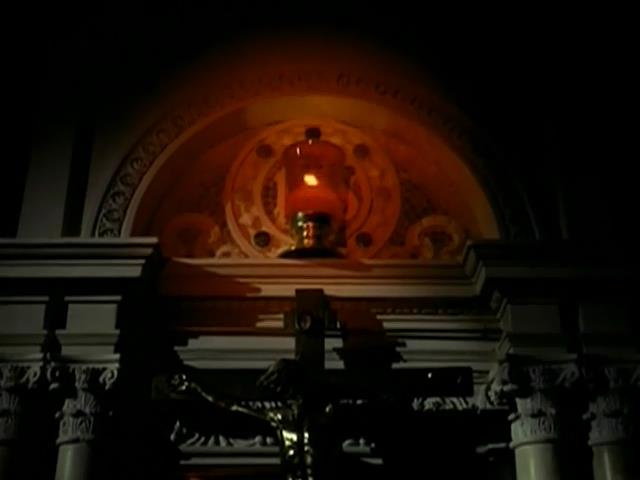
Publilius Syrus on the Republic,
“composition... Caesar.” The
theme is subsequently clarified as democratic principles in action (Lovin’ Molly) from another angle.
Elaborately built
with initial reference to If.... (dir.
Lindsay Anderson), modulating through Goodbye,
Mr. Chips (dir. Sam Wood or Herbert Ross) to unman, wittering and zigo
(dir. John Mackenzie), understood as a dispute among the faculty at a Catholic
school for boys.
Vincent Canby of
the New York Times could not follow
it, “seems just silly.” Variety, “a taut and suspenseful drama”. Roger
Ebert (Chicago Sun-Times), “we’re
confused.” Jay Cocks (TIME), “lame tale”. Tom Milne (Time Out), “atrocious nonsense”. TV Guide, “we’ve
seen it all before.” Halliwell’s Film Guide, “enjoyable overblown melodrama”.
Serpico
A very strange
picture of New York, a rookie cop finds the whole department is on the pad, he
transfers to the Bureau of Criminal Investigation and plainclothes, borough to
borough, until he’s shot in the face by a South Brooklyn heroin dealer while
expensively-padded fellow Narcotics detectives look on.
It all goes into
his testimony before a special commission, and into this film.
The authenticity
is vouched for by Vincent Canby, whose review sounds like a character in the
film. Halliwell hit the nail on the head as rarely, “a
harrowing true story played with authentic gloom and violence,” furthermore he
cites Stanley Kauffmann in rebuttal, “there’s nothing seriously wrong with Serpico
except that it’s unmemorable, and not even terribly exciting while it’s going
on.”
Lovin’ Molly
Lovin’ Molly is, among other things, a very precise
transcription of Jules et Jim from a European-centered political context
into a purely American one, but as our critics have never bothered overmuch
with any kind of understanding where Truffaut (or much of anything else) is
concerned, they have been content to notice a superficial resemblance and add,
somewhat feebly, “Texas it ain’t”.
France and
Germany are not considered, but Republicans and Democrats, which accounts for
the mummery. The great actors who have these roles
(with Molly as America herself, who sees her dead or absent men “rising with
the moon”, a note from John Ford) imbue them upon occasion with expressivity,
especially physical, but a kind of realism sometimes regretted is not in the
stores of a political cartoon.
The film is in
three parts, filmed on location. Gid narrates the tale
in 1925, in the days of Calvin Coolidge, when these two young cowpokes are
nearly indistinguishable. Molly takes it up in 1945,
when the nation is at war (she has married, because he needed her, a third
party whom she has long since buried). Johnny
concludes it in 1964, in LBJ’s days.
This sort of film
(Elaine May’s Ishtar is a prime example) tends
to discombobulate party types, because, insofar as they most certainly are party
types, they like to see themselves alone and alone in the right, which accounts
for the rather more than rash comments directed at this film as though it were
a parakeet’s mirror, ignoring its most comical, most subtle view—not that there
is any attempt to conceal it overmuch (the makeup takes its cue from the broad
farce of Welles’ Mr. Arkadin), as if anything needed to be hidden when
the critics are doing their job.
Murder on the Orient Express
The two salient
points are the vindication of Lindbergh and the defense of Poirot’s “second
theory” against such films as Jacques Becker’s Touchez pas au grisbi,
Ritchie’s Prime Cut and Hodges’ Get Carter, expressing his first.
That is to say,
Lindbergh was destroyed by the kidnapping, and the Second World War was not a
rivalry of opposing gangs.
The metaphors are
unified in the atrocity of the crime as portrayed.
Criticism has
never essayed a proper analysis, which for a film of this magnitude is a
compliment to the public.
Dog Day Afternoon
Dali cast aspersions
on Buñuel’s putative idea of filming all the stories in the day’s newspaper one
day, it amused Buñuel to pretend he was a beggar once like Sullivan on his
travels, and Lorca was denied even “a tiny bit of the Divine Dali’s asshole” to
the painter’s regret later, “deep down, I felt he was a great poet”.
Lumet has every
base covered in this epic on a Brooklyn street, he sews up the tatters in his
net and includes everything in his satire, good does not triumph nor evil
expire, though both get their due, but truth and beauty triumph over the lot.
Beckett has this
in mind when he writes of language like a veil that must be torn to get at the
underlying truth (or the underlying nothingness) there. The
stress of action shows up cops and robbers in a compromise with reality,
witness is the real response, that of Agent Sheldon, who is at least partly
identified with Lumet.
Popcorn diversion
is provided by the symmetry of the robber pair, an abstaining suicide-murderer
from another country called Wyoming and a henpecked sodomite wishing to change
the view.
Network
The
Chayefsky/Lumet remake of Capra’s Meet John Doe has largely been taken
as a satire of television, which it partly is, and nowadays is marveled at
properly for its prophetic truth, but it’s the same story now as it was in
1941, only Chayefsky has honed a few details and essentially transposed the
medium from newspapers and radio to TV news. Chayefsky’s
economy elides Capra’s conclusion, but the same comfort is offered then as now.
Lumet carried the
analysis still further in Power, sharpening a fine point at issue, but
it was made in Avildsen’s The Formula as well (“we are the Arabs”). By the same token, Network is the genesis of Verhoeven’s Robocop in its vision of Mammon ruling
the world and stock ownership replacing the irreducible individual.
Equus
Shaffer’s
analysis of Reflections in a Golden Eye is eloquent and biting and
altogether the point, his screenplay even has Huston’s gold tinting in Dysart’s
dream (Lumet has his “steel-plated” cabbage field in moonlight, followed by the
stable loft that warms in tone).
Self-mutilation
becomes something else again, the elements are rearranged somewhat.
A secondary
interest is doubtless the satire of provincial psychiatrists and horsemanship
attendant on the analysis.
The Wiz
One admirer is
Fellini in La Città delle donne. One influence
is Russell’s Tommy.
Lumet’s great
musical is about a Harlem girl stuck at home who’s “never been south of 125th
Street.” Like Archie Rice’s daughter, courage, hope
and heart are lacking to her. It’s quite a different thing, an analysis of Fleming’s or Semon’s
The Wizard of Oz with a bare prologue and epilogue of home.
No effort is
spared in any dimension, all to bring the camera to bear on the image governed
by Lumet’s constant attention, no director could
outrival the opulence of the production in itself or the skill of the
treatment.
Just Tell Me What You
Want
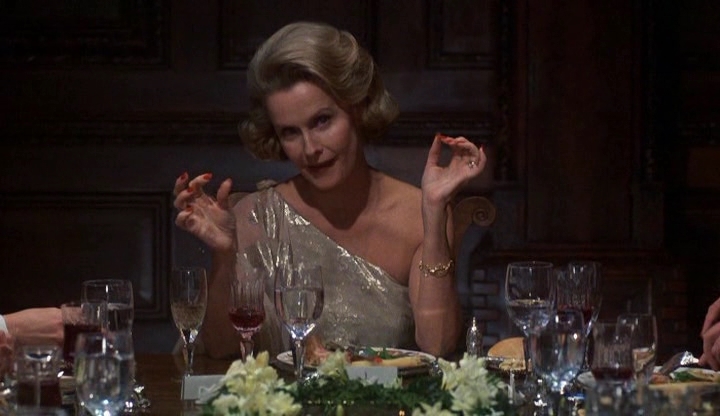
Lumet on stage,
screen and television.
Cf.
for instance Other People’s Money
(dir. Norman Jewison), “The Girl with the Golden Breasts” (Trapped Ashes, dir. Ken Russell).
Roger Ebert (Chicago Sun-Times), “occupies a world
most of us have fantasies about.” TV Guide, “curious little sleeper.” Film4, “ultimately doesn’t add up to
very much at all.” Catholic News Service Media Review
Office, “condones immoral actions and features foul language... morally
offensive.” Dan Pavlides (All Movie Guide), “Sidney Lumet romantic
comedy.” Halliwell’s
Film Guide, “silly”, citing Variety, “trashy”.
Prince of the City
Here is the
enormous effort required to turn one cop in a crooked department, and you
recognize the New York problem of On the Waterfront. He
and his partners are “whores and thieves” and talk that way, it takes nearly
all the film’s length to get a satisfactory rendering of the facts from him,
useful for indictments, and make him presentable to recruits at the Academy.
The stunning
effect of Serpico had to be given more breadth, and there a definition
of the problem is stated, if cops on the take were doing their job instead, no
more crime.
Heroin is
acknowledged as the major corrupting influence in Prince of the City, so
much money.
Deathtrap
Critics have always
termed the screenplay a minor thing overdirected by Lumet.
This is the
evident basis of Frears’ Prick up your ears on the one hand, and
altogether a masterwork of the cinema.
The direction is a
complex affair of lighting, set design and camerawork at the front end of the
business, the acting is a rare treat and absolutely perfect, the play is rather
like Losey’s The Romantic Englishwoman in a way, with a message of
consolation for the injured party.
That’s how much
critics know.
The Verdict
The lawyer’s
Irish joke at the Boston bar is the key to it all.
Abstruse as the
mystery is, structurally speaking, it has a lot to do
with All the President’s Men (dir.
Alan J. Pakula).
The point is, if you sick a hooker on a man, for whatever reason, you
pay the freight.
Daniel
The material
dates back to O’Neill’s The Iceman Cometh
and concerns “the movement” (Loach has an apt commentary in Land and Freedom).
To the limits of
absurdity this is examined six ways from Sunday, only to end at a Central Park
sit-in.
The Rosenberg
case is always cited in reviews, the New
York Times detailed Peter Kihss (“pronounced KEYS”), described by Robert D.
McFadden as “one of America’s best reporters”, to review the film by
distinguishing it from the case. The general critical
impression is that Lumet has not solved it.
It is easy to see
a great work of the cinema, exemplarily filmed, on a theme also close to
Bertolucci’s The Dreamers.
Garbo Talks
No matter how you
look at it, the material presents certain difficulties. Lumet
adopts a hands-off policy, instead concentrating on set-ups and camera movement. At the great meeting, the camera is at an angle looking
past Garbo to the patient, then as slowly as possible moves in to a close-up of
the latter, eclipsing the former—a shot adapted out of Welles’ The Lady from
Shanghai.
The other great
meeting, of the son and the actress, is handled similarly, at an angle, very
slowly, and dividing the screen by décor.
Hermione
Gingold’s performance also has a somewhat altered tempo, and seems miraculously
to have escaped notice. John Schlesinger’s son the
critic appears as himself, and so does Adolph Green (Betty Comden appears as
“another person”).
A relatively
early example of a marketing débâcle that is now de rigueur,
because truth and beauty are notorious apple cart upsetters.
Power
The Candidate laid the bride of politics bare to the bachelors
of her public, and still political advertisements are big business, the stuff of
political commentary and the subject of reform. And
yet they are as interchangeable and personal as shampoo bottles.
So you have Power,
which perseveres along the line exposed by The Selling of the President 1968
and Michael Ritchie, just so you know the Wizard of Oz is Frank Morgan and no
other. Roger Ebert tells, in his review of this film,
how flabbergasted television executives were by the truth of Network. Alas, in political circles he was not used to running, and
so we have had to wait twenty years or so to see the truth of Power.
The equivoque of
the title is prepared by a tacit jest that is framed in the context of a Latin
American election campaign managed by the all but ubiquitous Pete St. John
(Richard Gere). During a rally, a car bomb goes off,
and the candidate rushes from the dais to comfort one of the wounded. To be sure, a “candidate” is one who wears the white
garment of Roman office-seekers. St. John directs a
camera crew to capture the scene on film, then tells the candidate to wear his now
bloodstained white shirt at every rally henceforth. “If
it bleeds it leads,” says a reprehensible journalistic axiom, and in this case
it leads the country.
There is one more
great joke at least. New Mexico gubernatorial
candidate Wallace Furman (Fritz Weaver) is dressed as a cowboy riding a white
horse and spearheading a wagon train across the desert in a mammoth campaign ad
again directed by St. John, with a helicopter shot and all. As
Furman reaches the foreground, his horse begins to scare at the noise of the
helicopter, and throws him off. The expensive shot is
ruined, but St. John recoups by stopping the film just at the moment when the
horse rears, making it look as if Furman were The Lone Ranger.
Video output and
statistical information are the keys to power, which is the meaning of the
culminating montage that so vexed Ebert. As a matter
of fact, St. John simply quotes a price to one prospective candidate for the
U.S. Senate, not his own fee but the amount of money that must be spent to
secure the seat.
But where is real
power? It is in oil, and that governs the actual
making of men of state. St. John is bullied and bugged
into a sudden access of well-meaning whimsy, during which he bolsters the manly
purpose of a marginal candidate whom he had earlier derided.
Great play is
made with surfaces that are shiny to the point of liquidity, which gives floors
that are so reflective the actors appear to be lighted from below (another
thing that mystified the Sun-Times).
The Morning After
This is all told
a very patient study of Los Angeles in 1986 from a photographic point of view,
with color pictures patently rivaling Harry Callahan’s or nearly, and
cinematically a study of various light in the city.
“Instantly
disposable,” Vincent Canby, New York Times.
“Overwrought and
implausible,” Variety.
There is a very
nice direction toward Hawks’ The Big Sleep, if any of the professionals
had bothered to notice.
Running on Empty
An anagram of
Cassavetes’ Big Trouble, long before Gloria.
And this is what
it takes to get to Juilliard, let alone Carnegie Hall, from New Jersey and
points elsewhere, as the critics will attest.
Not a serious
film. “‘Tis the supreme of power; ‘tis might half
slumb’ring on its own right arm.”
A warning shot
across the bow of unreason, sufficiently.
Two paths in a
wood by Frost, arrived at by intermittences. The
opening shot suggests Bergman’s query, and leaves it behind.
Family Business
Plasmids for
agriculture free of fertilizer are the loot. They are
the figment of a start-up company that needs more time to satisfy its
investors.
A ganef, the
ganef’s son turned legit in the meat business, and the ganef’s grandson on a
scholarship, rob the joint to redress a wrong against Prof. Jimmy Chiu, fired
and cheated, so as to share in the profit from his rightful invention.
The kid gets
caught, his father turns himself and granddad in. Probation
for everybody save granddad, who keeps the phony plasmids and the formula that
doesn’t work a secret.
This ought to
have meant something at the time, but every ten years it becomes more telling,
so that any day now critics will be admiring it, another robbery for naught
like The Anderson Tapes. A fairy tale about the
true ganef, the conservative ganef, and the liberal ganef, with something in it
of Coppola’s three godfathers.
Q & A
This is about a
cop who has gone over to the Mafia, and about an assistant district attorney
wet behind the ears.
Critics were
mainly surprised, so they have written, by the Dirty Harry (dir. Don Siegel) dialogue among detectives,
and by a certain Mafia view of outsiders that is quite familiar, as one would
say.
These are the
major considerations, the consequences of Serpico
are a new sense of cleanness and a catastrophic buyout with political
implications that may amount to nothing, in the long run.
The Mafia is what
it is, cops are what they are, “cops and robbers”, as
the dialogue goes.
The material is
well-known from hundreds of crime films and war films in a specific instance
here as Gotham fooling itself the way only Gotham can.
a Stranger Among Us
An essential New
York formula, Irish and Jewish, expressed as a complex form made up of jokes,
in a manner of speaking. The cop’s daughter is a
detective, he’s retired and in AA. The Hasidim are
even less worldly than Lumet’s pawnbroker, and live a life of strict discipline
and prayer that is as arduous as a military academy.
The detective is
a “cowboy” and has seen “a lot of shit”, the rebbe
from Auschwitz commiserates with her, like Stravinsky and the Pope.
A young diamond-cutter
is murdered, the detective investigates the missing-person report. A couple of cheap hoods muscle in for protection money. The title character is a girl from the streets rescued by
the community.
No picture, not
even a Hollywood Picture, is as dumb as a critic, read them yourself and be
edified.
Guilty as Sin
The Hollywood
Pictures ending would tally this as a wishful plea for State’s evidence from
the former First Lady and junior Senator from New York and Secretary of State,
but on the whole (as Ebert noted) it’s a parody of the Clintons, taking for its
cue a line from Nabokov’s story, “The Assistant Producer”, “and that is why I
know perfectly well the kind of face General Golubkov and his wife had when the
two were at last alone.”
Technically its point of departure is Jewison’s ...and justice for all.
and Lumet’s The
Verdict. A Hitchcockian finale is prepared
a few scenes earlier in the Fritz Lang Metropolis
courtroom by a Hitchcockian treatment of actors. The
compositions are among the most perfect ever achieved in film, brilliant planar
associations and dissociations.
Night Falls on Manhattan
Serpico and Prince of the City continue here as the
drug dealer in the bust common to all three films is heard from in court.
Q & A provides the assistant district attorney (later
district attorney), down to his white socks. The
Verdict contributes a theme of divided loyalty.
It should be
plain to see that this is a major summation, but critics were generally unable
to see anything at all.
The title is
precise, though Kauffmann saw a last light peeping. The
film isolates the horns of a dilemma it cannot resolve.
A nefarious
hoodlum (Shiek Mahmud-Bey) is sought for drug-dealing, kills several cops and
escapes. A “great attorney” (Richard Dreyfuss)
surrenders him and offers a plea of self-defense, the cops were out to execute
the man because a rival offered a bigger payoff. That’s
the dilemma.
The plot is
detailed and symbolic, and sparing the critics only because Lumet’s lightning-quick
technique demands re-viewing, all of its parts mesh, though at some pretty far
removes occasionally, as in the relationship between the DA and a member of the
defense team (Lena Olin).
All it does, this
film, is state very clearly in a single work a certain conflict that occurs in
the dark, so as to avoid the jarring surprises offered by its elements. That’s really useful, and if it gives a dramatic
equilibrium, observe the breakdown of law and order leading in Serpico
to exile, but in Gordon Parks’ The Super Cops to the daily grind (hence,
perhaps, Ron Leibman’s presence).
The acting and
direction have been universally commented on, with only slight reservations as
to this or that nuance, owing to some difficulty with the perception of
shifting perspectives, but that would be to miss the general effect of eyes
dilating in the dark, or more strictly speaking, of stumbling-blocks located in
obscurity.
The performances
are brilliant, especially Leibman as the outgoing DA and Dreyfuss as a workaday
crusader. The detail work is quite extensive among the
cast, Mahmud-Bey does an explosive turn like Clarence Williams III’s onstage in
Stoppard’s Night and Day, and the jury seen in a slow dolly shot is
remarkably true to life.
Critical Care
The joke is, “Sam,
you made the pants too long,” witness the men’s costumes.
Fashion is the
presiding metaphor, Carnaby Street vs. the Bible Belt.
Mark Twain
governs the picture as Dr. Butz, a figure of fun.
The moral, surely,
is that sleepless third-year residents should not be overtaxed.
Gloria
Lumet’s copy of
the Mona Lisa.
She comes from
taking a three-year rap in Miami to defend the Puerto Rican kid from the Irish
designer mob in New York, he doesn’t like the posh upstate school and he’s not
safe there anyway, she takes him down to Miami for her date with a parole
officer. The mob keeps his father’s “bible”, a computer disk of every cop, judge and congressman on
the pad.
Lumet’s version
is therefore different from its original. A thorough
new consideration of the theme, much closer to Richardson’s The Border
and De Palma’s Scarface despite a central point and several lines
directly from Cassavetes.
Find Me Guilty
Ira Reiner,
former District Attorney of Los Angeles, was asked before one trial conducted
by his successor how he thought it would go, and replied that it wouldn’t be
one of those Perry Mason trials where the truth is suddenly revealed at the
end, without realizing perhaps that this was Hamilton Burger’s own reply to a
similar question, in practically the same words.
Lumet’s film
imitates life consciously, determinedly and precisely. These
are the cozening lawyers who practice upon a rapt jury, this is the complaisant
and vain judge, it’s the daily life of legal practitioners as we know them. “God only knows,” they say, when asked what it means that
the jury has returned early.
The majesty of
the law, nevertheless, reveals itself. And there is a
defendant who rises to the occasion in propria persona to answer the
charges and expose a prosecution built on sand.
One critic, G.
Allen Johnson of the San Francisco Chronicle, has understood this film
rather well. Others complained of its moral unfitness. Their position is explained by still others who rank the
film as incompetent, so scrupulous and exacting is its representation of
reality.
The beginning
cites Coppola’s The Godfather and Scorsese’s Goodfellas in quick shorthand exposition, the ending
suggests Rosenberg’s Cool Hand Luke. Wiard’s Tom Horn figures in the pasty-faced
justicers throughout.
The image is so
grievously deteriorated by the digital transfer that the reasons for its
treatment thus must have included a firing squad for distant relations.